
Our road to net zero

Climate change is one of society’s greatest challenges. It is also one of the greatest risks to the future of our business. Limiting its severity and impacts requires all of us to act with urgency.
As a food and beverage business, we are reliant on the natural environment for the supply of raw ingredients to make our products. It is in our interests to support a supply chain that is resilient to the impacts of climate change.
Globally, Nestlé has committed to reaching net zero greenhouse gas (GHG) emissions by 2050. We are proud of the progress made so far, while also recognising that there is much work still to be done. By the end of last year we achieved a 20.38% net reduction of GHG emissions versus our 2018 baseline. When we talk about our GHG footprint, we are referring to the emissions within the scope of our commitment.
We are aiming for a reduction of 50% by the end of the decade.
In 2020, we published the Nestlé Net Zero Roadmap, a comprehensive strategy for reducing emissions across all three Scopes of Nestlé’s activities: emissions that Nestlé creates directly as a business (known as Scope 1), the emissions associated with the energy we buy and use (Scope 2) and those in our value chain (Scope 3). Almost all our GHG emissions (~95%) are from Scope 3 emissions. Dairy and livestock ingredients are the largest single source of our Scope 3 emissions, representing 30% of Nestlé’s GHG emissions.
We have approved near‐ and long‐term science‐based emissions reduction targets with the Science Based Targets initiative (SBTi). The SBTi has validated Nestlé’s net zero science‐based target by 2050.
Net zero by 2050
20
%
50
%
Net zero
What we are doing to reduce emissions
GHG reductions and removals
To achieve net zero emissions, we are reducing emissions throughout our business and supply chains.
We are collaborating with suppliers, farmers and communities to adopt and expand regenerative agricultural practices aiming to improve soil health and absorb carbon. We are investing in emission reductions related to logistics, packaging and manufacturing. We are reducing the risk of deforestation through assessing our key ingredients as deforestation-free.
Our Net Zero Roadmap includes carbon removals through natural climate solutions. These projects occur within the landscapes where we source our raw materials, enabling forest restoration, wetland rehabilitation and peatland preservation. These efforts aim to benefit biodiversity and local communities while creating measurable carbon reductions.
These removals projects take place in the landscapes where we source our raw materials, and help restore forests, wetlands and peatlands. Our projects can also help generate additional benefits for communities and protect natural ecosystems.
We have already begun this process, initiating projects that will sequester millions of tonnes of CO2e over their lifetimes through our Global Reforestation Program.
Our corporate net zero program does not use carbon offsetting outside our value chain. However, in some circumstances, our brands can purchase credits to compensate for additional emissions relating to their life cycle. In those instances, brands may purchase high-quality carbon credits that help fund natural climate solutions and other activities outside of Nestlé's value chain – including tree planting, forest protection and, in some cases, social programs for rural communities. These are not a substitution for or a distraction from our corporate plan and brands are also required to reduce emissions in line with our corporate objectives.
Our roadmap in action
-
We aim to grow 10 million trees in Australia Learn about our activities to help restore forests.READ MORE
-
Regenerative agriculture: an essential transformation Shifting to regenerative ways of growing ingredients for our products helps improve soil health and increases its ability to absorb carbon.READ MORE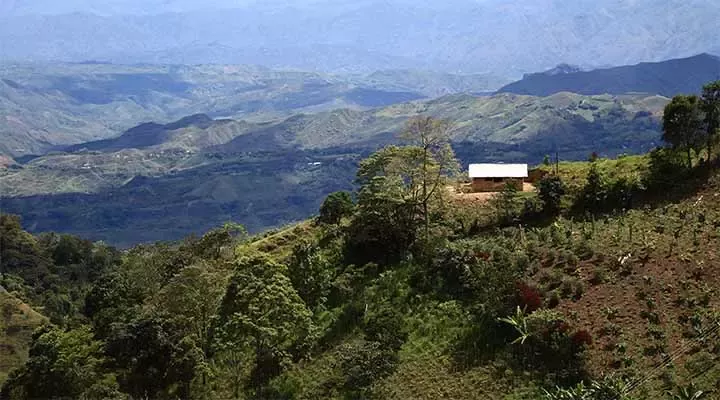
-
From renewable electricity to lower emission fleet vehicles See how we are working to reduce emissions across our operations.READ MORE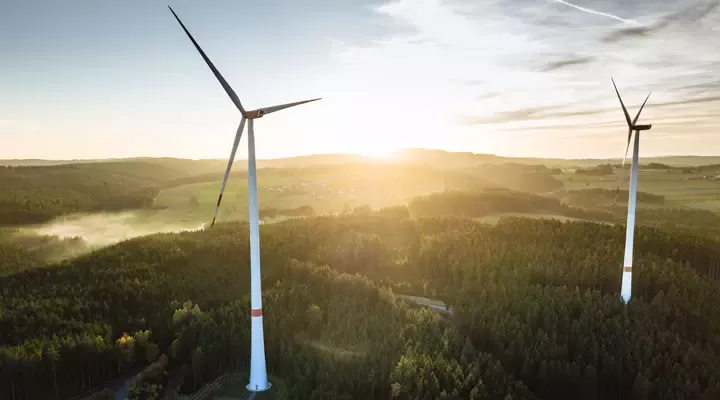
-
We aim for more than 95% of our plastic packaging be designed for recycling systems by 2025 We’re innovating our packaging, working toward 100% recyclable or reusable packaging to reduce emissions and waste.READ MORE
-
Transforming our portfolio We are transforming our portfolio by using more ingredients with less carbon footprint.READ MORE
Climate change is now a lived experience, not a future projection. For a company as dependent on agriculture as Nestlé, this matters – greatly – and is why we are so determined to play our part by reaching net zero no later than 2050.

Downloads
Download our Annual Review, Non-Financial Statement & our Creating Shared Value at Nestlé publication.